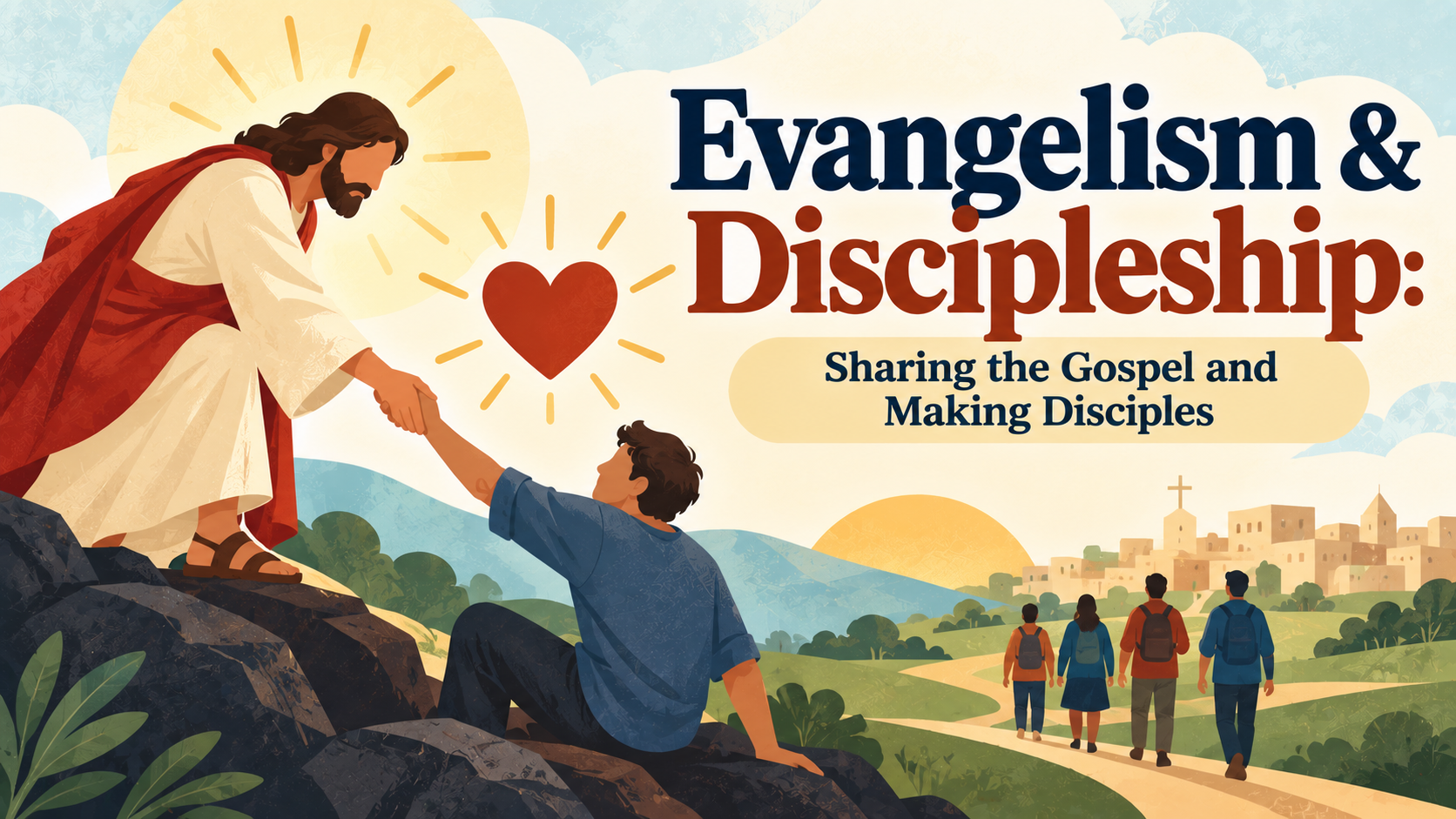
Evangelism & Discipleship: Sharing the Gospel and Making Disciples
A 20-lesson self-study course on biblical evangelism and discipleship, equipping believers to communicate the gospel clearly, build relationships, answer common questions, nurture new believers, and help others grow as faithful disciples of Jesus Christ.
Course Description
Evangelism and discipleship belong together in the mission Jesus entrusted to His followers. This 20-lesson course helps students understand the gospel, communicate it faithfully, depend on the Holy Spirit, engage people with humility and compassion, and walk with new believers toward mature Christian faith.
The course is practical and Scripture-centered. Students will study biblical examples of witness, learn how to share a personal testimony, respond to common barriers, follow up with new believers, teach foundational Christian practices, and develop a reproducible approach to making disciples who can disciple others.
What You Will Learn
Course Learning Objectives
By the end of this course, students should be able to:
- Explain the biblical meaning and relationship of evangelism and discipleship.
- Present the gospel clearly using key biblical truths and passages.
- Share a personal Christian testimony in a concise and Christ-centered way.
- Practice prayerful, respectful, relational, and culturally aware evangelism.
- Respond wisely to common questions and barriers without becoming argumentative.
- Guide a new believer through foundational practices such as Bible study, prayer, fellowship, obedience, and witness.
- Develop a simple discipleship plan that can be reproduced in the lives of others.
- Understand the role of the local church and the Holy Spirit in mission and spiritual growth.
How to Study
Read the assigned Scripture before each lesson. Keep a Bible and notebook nearby. Complete the observation and reflection activities, then answer the quiz and submit the written assignment in your own words.
Course Overview
Course Roadmap
The course begins with the mission of Jesus and the content of the gospel. It then develops practical skills for prayer, relationships, testimony, gospel conversations, and responding to questions. The second half focuses on conversion, follow-up, spiritual disciplines, mentoring, multiplication, the local church, and creating a personal evangelism and discipleship plan.
Course Emphasis: Evangelism is not manipulation, pressure, or winning arguments. Students are encouraged to speak truthfully, listen carefully, respect each person's dignity, depend on God, and invite people to respond freely to the message of Jesus Christ.