Exodus: Redemption, Covenant, and God's Presence
A 40-lesson study of Exodus tracing Israel's deliverance from Egypt, the Passover, Sinai covenant, God's law, tabernacle, priesthood, worship, and the glory of God's presence.
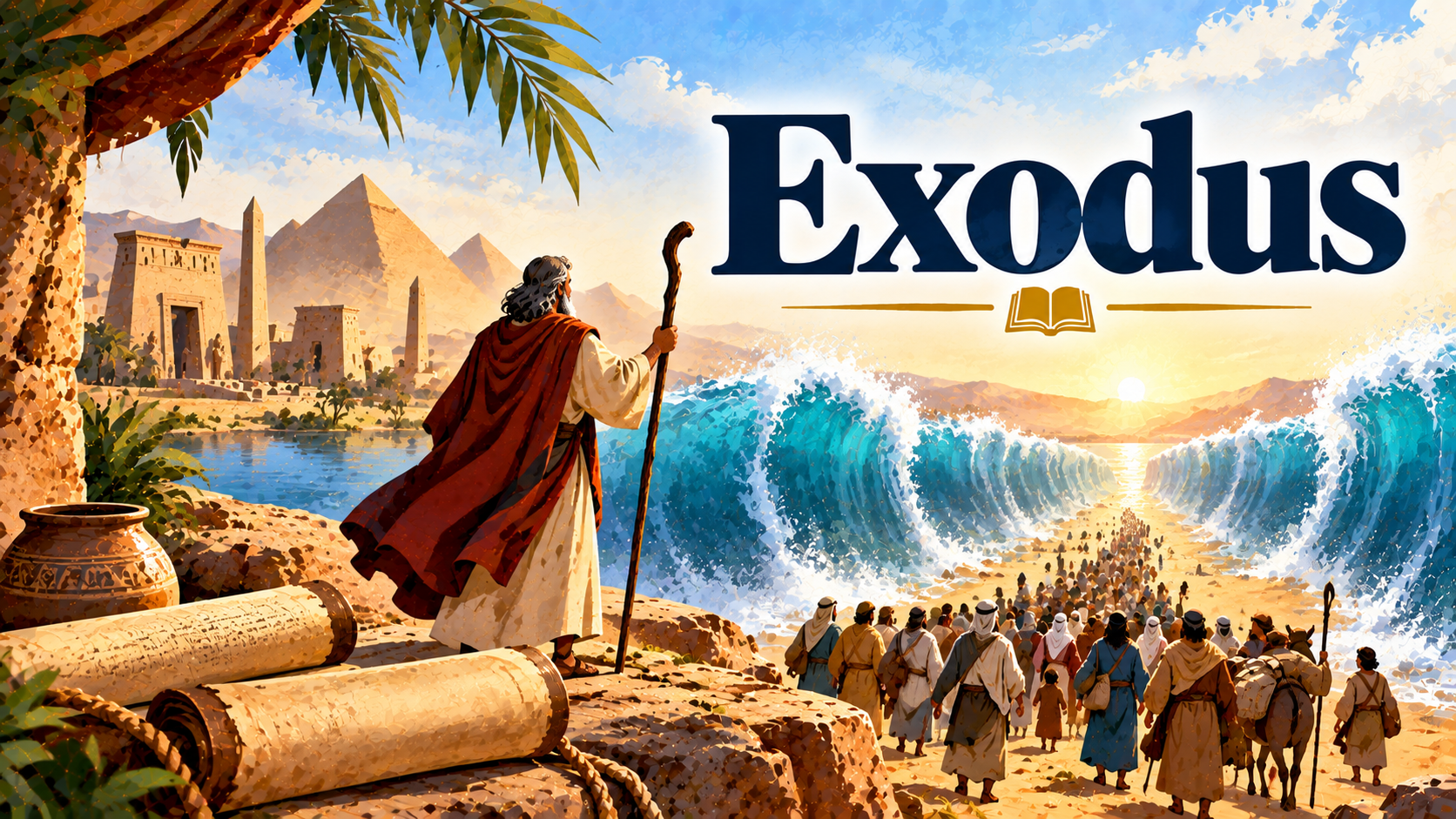
Course Description
Exodus: Redemption, Covenant, and God's Presence is a 40-lesson study of the second book of the Bible. Students follow Israel from slavery in Egypt through God's deliverance, the Passover, the Red Sea, wilderness provision, Mount Sinai, covenant law, the golden calf, covenant renewal, construction of the tabernacle, and the climactic arrival of God's glory.
What You Will Learn
Course Overview
This course studies Exodus as a unified book of redemption and divine presence. Students examine its narratives and covenant laws in context while tracing themes of God's name, deliverance, worship, holiness, justice, mediation, covenant, obedience, and presence.
Learning Objectives
- Explain the structure and major message of Exodus.
- Describe God's call of Moses and confrontation with Pharaoh.
- Explain the theological importance of the Passover and Red Sea deliverance.
- Understand Israel's wilderness testing and God's provision.
- Explain the covenant setting of the Ten Commandments and other Sinai laws.
- Interpret Old Testament covenant laws responsibly in their historical and biblical contexts.
- Explain the purpose of the tabernacle, priesthood, sacrifices, and holy furnishings in Exodus.
- Analyze the golden calf episode and Moses' intercession.
- Trace major Exodus themes into later Scripture responsibly.
- Explain why God's glory filling the tabernacle is a fitting climax to the book.
Course Overview
Course Structure
The course contains 40 sequential lessons covering Exodus 1–40. Each lesson includes primary Scripture, substantial study material, a plain-text assignment, and four multiple-choice review questions.
Study Method
Read every assigned passage in a complete Bible. Observe the difference between narrative and covenant law, pay attention to repeated statements about knowing the Lord and obeying his commands, and trace the movement of the book from oppression to God's dwelling presence.