Systematic Theology
A comprehensive 40-lesson study of the major doctrines of the Christian faith, grounded in Scripture and designed for theological understanding, ministry, worship, and Christian life.
Course Description
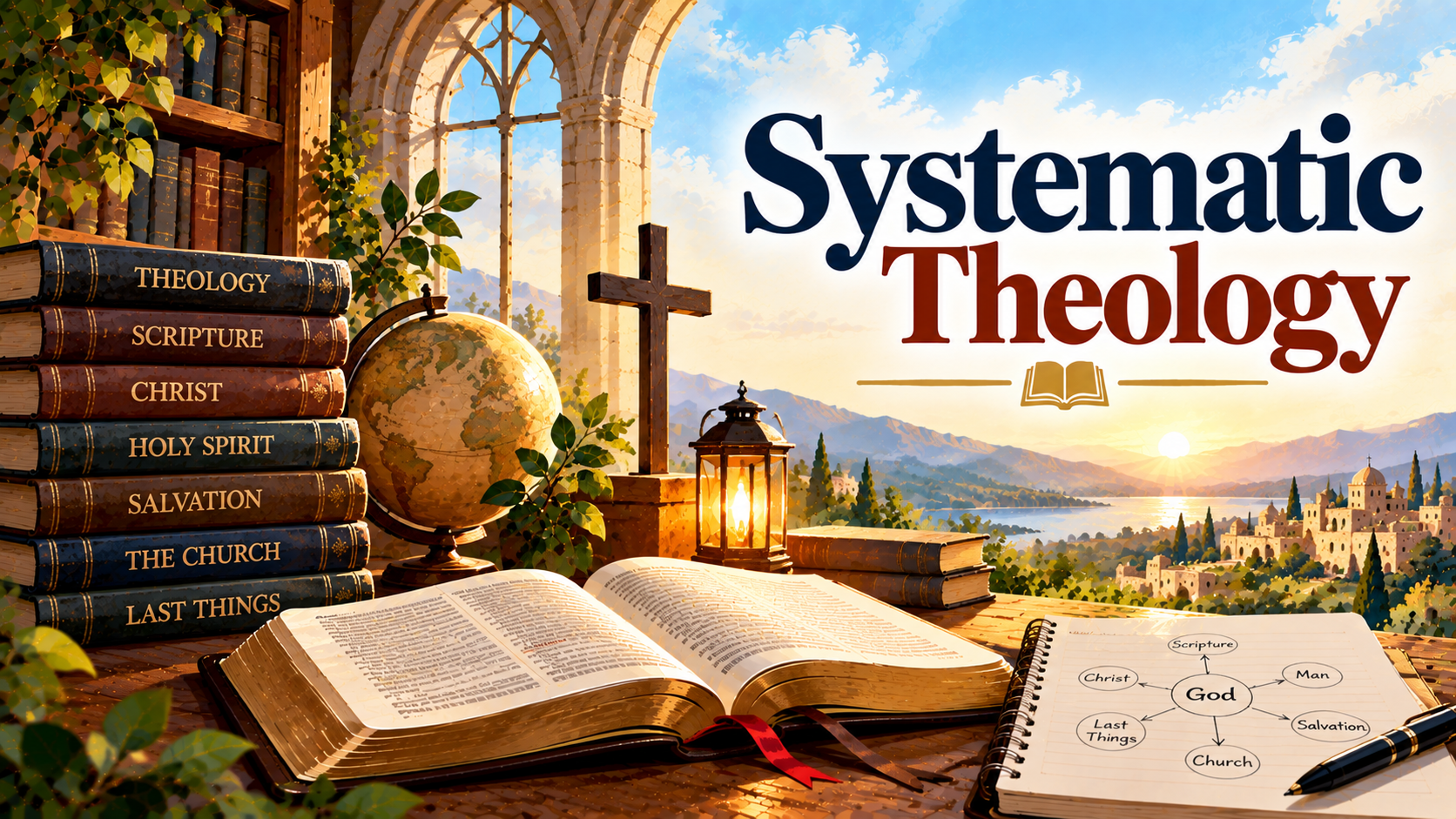
Systematic Theology is a 40-lesson course examining the major doctrines of the Christian faith in an organized and biblically grounded way. The course covers Scripture, God, the Trinity, creation, humanity, sin, Jesus Christ, the Holy Spirit, salvation, the church, Christian life, and last things. Students learn to build doctrine from careful interpretation of Scripture while recognizing important areas of historic Christian agreement and disagreement.
What You Will Learn
Course Overview
This course introduces students to systematic theology as the disciplined study of what the whole Bible teaches about major theological subjects. Lessons combine biblical foundations, doctrinal synthesis, historic Christian reflection, practical implications, assignments, and review questions.
Learning Objectives
- Explain the purpose and method of systematic theology.
- Articulate major Christian doctrines using biblical evidence.
- Understand the doctrines of Scripture, God, creation, humanity, and sin.
- Explain the person and work of Jesus Christ and the Holy Spirit.
- Describe the major elements of the doctrine of salvation.
- Examine the nature, leadership, practices, and mission of the church.
- Connect theology with worship, ethics, discipleship, and ministry.
- Describe major Christian teachings concerning death, Christ's return, resurrection, judgment, and new creation.
- Recognize significant areas where Christian traditions interpret biblical evidence differently and compare those views fairly.
- Develop a coherent theological framework grounded in responsible biblical interpretation.
Course Overview
Course Structure
This course contains 40 lessons arranged in a theological sequence. Every lesson includes key Scripture passages, substantial theological instruction, study guidance, a written assignment, and four multiple-choice review questions.
Study Approach
Students should read all assigned biblical passages in context, take notes in their own words, distinguish biblical statements from theological inference, and consult responsible theological resources where appropriate. On doctrines where Christian traditions differ, students should understand the principal biblical arguments before forming conclusions.